

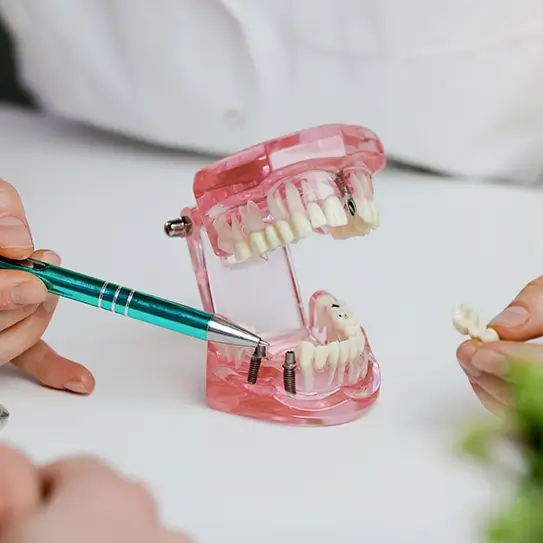
“Can this tooth be saved?” is almost always the first thing patients ask once they hear something serious is going on. It’s the right question. The answer comes down to a handful of factors: how much healthy tooth is left, whether the inside of the tooth is infected, the shape your gums and bone are in, and whether we can rebuild the tooth in a way that will actually hold up.
At Magnolia Dental, we walk patients in Louisville and the Hurstbourne area through this decision honestly. Sometimes root canal therapy is the right call and we keep the natural tooth. Other times, an extraction with a thoughtful replacement plan is genuinely the healthier road, even though pulling a tooth sounds like the worse option on paper.
For a wider view of urgent dental care, our pillar page covers it: Emergency Dentist in Louisville, KY: What to Do When Tooth Pain, Infection, or Injury Happens.
Why Saving the Natural Tooth Is Usually the Goal
Whenever we have a reasonable shot at it, we’d rather keep your tooth than replace it. Natural teeth do things that even the best replacements only approximate. They handle chewing pressure efficiently, keep your bite stable, stimulate the jawbone underneath, and hold the surrounding teeth in place so nothing drifts into the gap.
A root canal is the procedure that lets us save a tooth when the inflammation or infection has reached the pulp inside. We clean out the damaged tissue, seal the canal space, and then rebuild the tooth on top of it, usually with a crown. Despite its reputation, the procedure itself feels a lot like getting a filling. The relief afterward is the part patients tend to remember.
We provide full endodontic treatment in-house, including initial root canal therapy, retreatment, care for cracked teeth, traumatic injury follow-up, and more involved procedures when a case calls for them.
When a Root Canal Is the Right Move
A root canal makes sense when the tooth is damaged on the inside but the outer structure is still solid enough to be restored. Common situations that point us in that direction:
- Decay that has worked its way into the pulp
- An active infection inside the tooth
- Hot or cold sensitivity that lingers long after the trigger is gone
- Severe or throbbing toothache
- Pain when biting down
- Swelling, or a pimple-like bump on the gum near the tooth
- A blow to the tooth that has damaged the nerve
- A crack that has reached the pulp but stopped short of the root
In each of these cases, the goal is the same: clear out what’s damaged on the inside, leave the healthy outer tooth alone, and put a long-term restoration on top of it. More on root canal therapy.
When a Tooth Genuinely Can’t Be Saved
Sometimes the damage has gone too far. Forcing a tooth to stay in place when it can’t realistically be restored leads to recurring pain, repeat infections, or a fragile rebuild that breaks down within a year or two. In those situations, a clean extraction with a solid replacement plan is the better long-term answer.
A tooth often needs to come out when there’s:
- A vertical fracture running down the root
- Decay that has crept below the gumline
- Too little tooth structure left to support a crown
- Significant bone loss around the tooth
- Severe looseness from advanced gum disease
- A previous root canal that didn’t hold and can’t be predictably retreated
- A crack that extends too deep into the root
- An infection that won’t resolve with endodontic care
When extraction is the call, the conversation immediately shifts to what comes next. We’ll talk through dental implants, dental bridges, or dentures depending on what fits your situation, your budget, and your timeline.
What We Actually Look At Before Making a Recommendation
This decision isn’t based on how much the tooth hurts. A tooth can be screaming at you and still be perfectly savable. Another tooth can feel mostly quiet and have structural damage that makes a long-term repair unrealistic. Here’s what we’re weighing.
How Much Healthy Tooth Is Left
A tooth needs enough sound structure to anchor a restoration. If decay or fracture has eaten through too much of the wall, a filling won’t hold. After most root canals on back teeth, we’ll place a dental crown to protect what’s left and absorb the chewing pressure those molars deal with every day.
Where the Crack or Damage Is
Cracks get evaluated case by case. A crack that stays in the visible crown of the tooth is usually fixable. A crack that runs down into the root often isn’t. We provide care for cracked teeth and can usually map out where the crack is going within a single exam.
The Health of the Gums and Bone
A tooth is only as stable as the foundation underneath it. If advanced gum disease has caused real bone loss, even a perfectly restored tooth may not stay put. Our periodontal care focuses on keeping that foundation healthy so the work we do up top has something to stand on.
Whether the Infection Is Treatable
Most dental infections respond to a standard root canal. Some don’t. If a previous root canal has failed or there’s persistent infection at the root tip, we may consider retreatment, an apicoectomy, or other advanced options before we give up on the tooth.
The Long-Term Restoration Plan
A root canal isn’t the whole job. The tooth still has to be rebuilt in a way that lets you chew, bite, and live without thinking about it. And if a tooth comes out, that gap doesn’t stay empty without consequences. Either path needs a real plan attached to it, not just a quick fix.
After a Root Canal: The Final Restoration
Most back teeth get a crown after a root canal because they take the brunt of chewing forces and a hollowed-out tooth is more brittle than it looks. The crown caps the tooth, holds everything together, and dramatically reduces the odds of a fracture down the road.
Depending on the tooth, the full sequence can include:
- The root canal itself
- A buildup, or a post and core if much of the tooth has been lost
- A custom dental crown
- A follow-up to confirm everything has settled in
- Preventive care to protect the surrounding teeth from similar issues
We provide post and core procedures and dental crowns in-house, so the rebuild can usually happen in the same office that did the root canal.
If Extraction Is the Right Call, What Comes Next?
Removing a tooth handles the immediate problem. It clears out the infection, ends the pain, and protects the teeth on either side. The replacement plan handles the longer-term picture: chewing, speech, the way your bite fits together, and the health of the teeth and bone next door.
Dental Implant
An implant replaces the root of the missing tooth and supports a crown, a bridge, or a denture on top. For most patients who are good candidates, it’s the closest thing to having the original tooth back. More on dental implants.
Dental Bridge
A bridge replaces one or more missing teeth by anchoring to the teeth on either side of the gap. It’s a strong option when those neighboring teeth already need crowns, or when an implant isn’t the best fit for some reason. More on dental bridges.
Dentures and Partials
For patients missing several teeth, a full or partial denture is often part of the plan. We also offer implant-retained dentures when added stability is the priority. More on full and partial dentures and implant-retained dentures.
Why Comprehensive Care Matters Here
A serious tooth problem rarely involves just one type of treatment. You might need a diagnosis, an emergency root canal, an extraction, an implant consultation, a crown, and some periodontal follow-up, all in the same case. When those services happen across three different offices, things get lost in the handoff. Records don’t match up. Timelines stretch. The plan stops feeling like a plan.
Magnolia Dental keeps all of this under one roof: general dentistry, endodontic treatment, oral surgery, periodontal care, and prosthodontics. Going from urgent relief to a finished result happens with one team that knows your whole history.
How to Know Which One Is Right for Your Tooth
There’s no way to make this call from a Google search. The only honest answer comes from an exam: digital imaging to see what’s happening below the surface, bite testing, periodontal evaluation, and a hands-on look at the tooth. Patients sometimes show up convinced they need a root canal and walk out with a filling. Others come in hoping for a filling and leave with a more involved plan. The exam settles it.
During your visit, we’ll explain:
- What’s actually causing the pain or damage
- Whether the tooth is restorable
- Whether a root canal is the right approach
- Whether extraction is the healthier choice in your case
- What restoration or replacement options come next
- How this treatment fits into your bigger oral health picture
The recommendation should rest on comfort, function, stability, and what’s likely to hold up over time. Not just whatever ends the appointment fastest.
Root Canal and Extraction Care in Louisville
Magnolia Dental is on S Hurstbourne Parkway in Louisville. We see patients from Hurstbourne, Jeffersontown, Middletown, and the surrounding east Louisville neighborhoods, and we handle both the urgent visits and the longer-term restorative work that follows.
Whether your tooth can be saved with a root canal or needs to come out and be replaced, we’ll give you a clear read on the situation and a plan you can actually feel good about.
More on urgent dental care: Emergency Dentist in Louisville, KY: What to Do When Tooth Pain, Infection, or Injury Happens.
Call Magnolia Dental for Tooth Pain or a Damaged Tooth
If you’re dealing with severe tooth pain, swelling, a cracked tooth, or a damaged restoration, the situation rarely improves on its own. We can take a look, explain what’s going on, and help you decide whether a root canal, an extraction, or something else is the right next step.
Call Magnolia Dental today to schedule an appointment in Louisville.